
Wall Hung vs Floor Mounted Toilet: Which Is Better?
Picture two bathrooms. In the first, the toilet sits on the floor like it always has, with a neat little gap behind it where dust likes to hold meetings. In the second, the toilet appears to float on the wall, the floor runs clean underneath, and the cistern has vanished. The second one looks like a hotel. The question is whether it also lives like one.
If you’re renovating, you’ve probably met the wall hung vs floor mounted toilet debate already. I’ll walk you through how each type works, what it really costs, and which one suits your space, so you can decide with confidence. If you want to see the products while you read, open our sanitaryware collection in another tab.
Wall Hung vs Floor Mounted Toilet: The Quick Answer
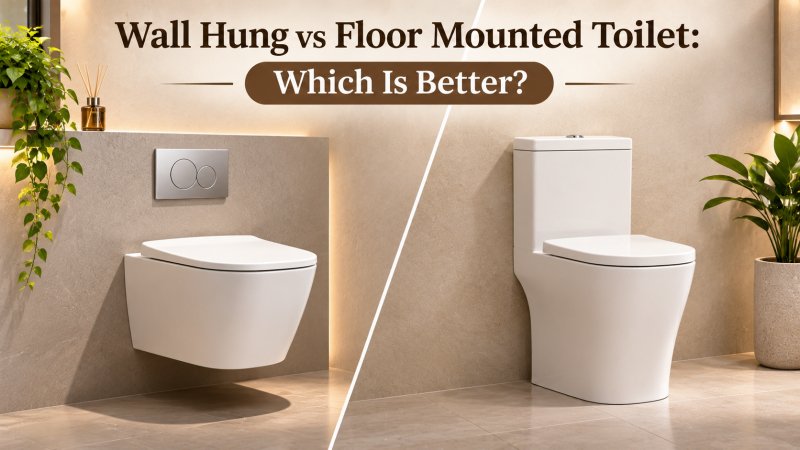
A wall hung toilet is mounted to the wall on a hidden steel frame, with the cistern concealed inside the wall. A floor mounted WC sits directly on the floor and bolts down, usually with an attached or exposed cistern. In the wall hung vs floor mounted toilet comparison, wall hung wins on looks, cleaning and flexibility, while floor mounted wins on price and easy installation. Neither is better in every case. The right choice depends on your wall, your budget and your plumber.
Insert image comparing a wall hung toilet and a floor mounted toilet side by side here
|
Feature |
Wall hung toilet |
Floor mounted WC |
|
Mounting |
Hung on a frame inside the wall |
Bolted to the floor |
|
Cistern |
Concealed cistern, in-wall flush tank |
Attached or exposed tank |
|
Floor cleaning |
Very easy, open space below |
Harder around the base |
|
Installation |
More complex, needs frame and wall space |
Simple and standard |
|
Upfront cost |
Higher |
Lower |
|
Bowl height |
Set during installation |
Fixed by the model |
|
Repairs |
Through the flush plate or access panel |
Direct access to the tank |
|
Look |
Minimal and modern |
Classic and familiar |
What Is a Wall Hung Toilet and How Does It Work?
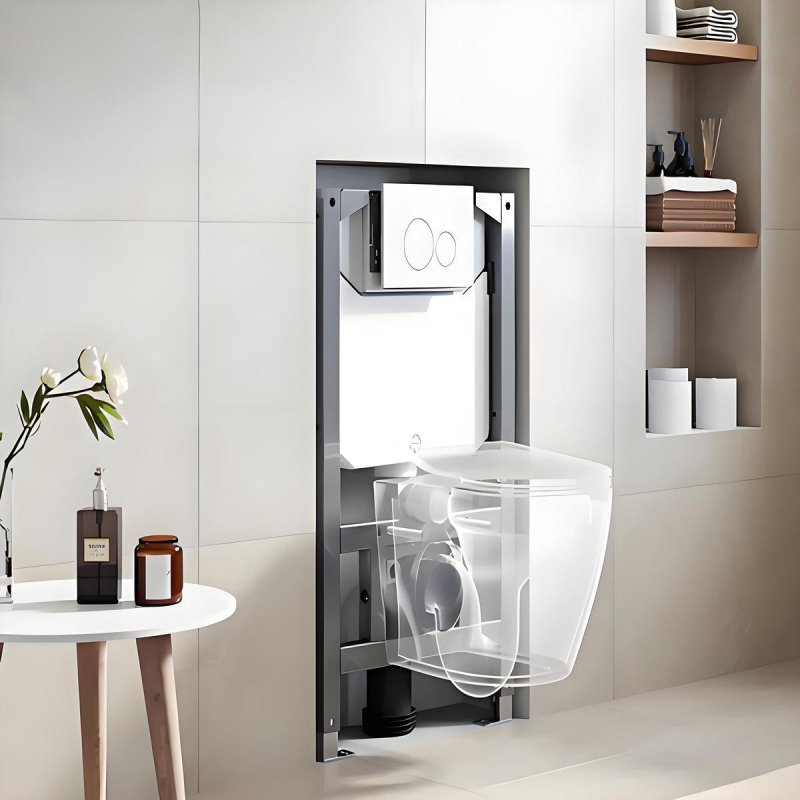
A wall hung toilet has no pedestal. The bowl is bolted to a steel carrier frame, and that frame sits inside the wall or a false wall built in front of it. Behind the tiles lives a concealed cistern, also called an in-wall flush tank, and the only part you see is a slim flush plate. Pipes, tank and fixings disappear, which is why the whole thing looks so clean.
That hidden setup explains both the charm and the catch. You get a smooth, uncluttered look and a bowl that seems to float. But the wall must be strong enough to carry the load, and the frame usually needs a cavity of roughly 12 to 20 cm behind the tiles, depending on the model. Skip the planning stage and you’ll learn this the expensive way.
What Is a Floor Mounted WC?
A floor mounted WC is the toilet most of us grew up with. The base sits on the floor and is bolted down, and the waste connects through the floor or the wall behind it. The cistern is either joined to the bowl, as in a one piece closet, or sits on top in a two piece design.
It’s easy to understand and easy to install. Almost any plumber can fit one in an afternoon, and spare parts are simple to find. For rental properties, budget renovations and bathrooms with thin walls, a floor mounted WC remains a sensible choice, not a compromise.
Wall Hung Toilet Pros and Cons
Here’s the honest scorecard for a wall hung toilet:
Pros
-
Easy floor cleaning, since there’s nothing to scrub around
-
A space-saving bathroom look, because the floor stays visible
-
Bowl height you can set to suit the people using it
-
A concealed cistern for a minimal look and often a quieter flush
-
Shorter projection, which suits compact rooms
Cons
-
Higher upfront cost for the frame, cistern and labour
-
More complex installation and wall preparation
-
Repairs go through the flush plate or an access panel
-
Needs a sturdy wall and enough depth behind it
Wall hung toilet pros and cons split buyers because the benefits show up daily, while the costs show up once, at installation. If you’re happy to pay once for years of easier cleaning, the pros usually win. If your wall is a thin partition or your budget is tight, the cons weigh heavier.
Water Use and the Flush: Does the Type Matter?
Most wall hung toilets come with a concealed cistern that offers dual flush, which brings us to water use. According to the US EPA, toilets account for nearly 30 percent of an average home’s indoor water use. WaterSense labelled models use 1.28 gallons per flush or less, which is 20 percent less than the federal standard of 1.6 gallons per flush. You can read more on the EPA WaterSense residential toilets page. epaepa
That matters for either type. A dual flush in-wall flush tank lets you use a small flush for liquid waste and a full flush for the rest, and a floor mounted WC can have the same feature. So water saving shouldn’t decide your choice by itself. Check the flush volume on the specification sheet instead.
Wall Mounted Commode vs Floor Mounted Commode: Height and Weight Capacity
Now for the practical details that decide most purchases. Installation height is a real advantage of a wall hung toilet, because the installer sets the bowl at the height you want. US accessibility standards call for a toilet seat height of 17 to 19 inches (about 43 to 48 cm), and a wall hung closet lets you hit that number exactly. That suits taller users, older family members and anyone with sore knees. A floor mounted WC comes at a fixed height set by the model, although raised bowls exist.
Weight capacity is the question everyone whispers. A wall hung toilet installed on a proper carrier frame is built to carry a normal adult load with room to spare, and good frames are commonly rated at around 180 kg or more. Check the manufacturer’s rating, make sure the frame is fixed to solid structure, and avoid fitting one on a flimsy partition. If you’re weighing wall mounted commode vs floor mounted commode for a home with heavier users, ask your supplier for the tested load rating before you buy.
Wall Hung WC Price: What Affects the Cost
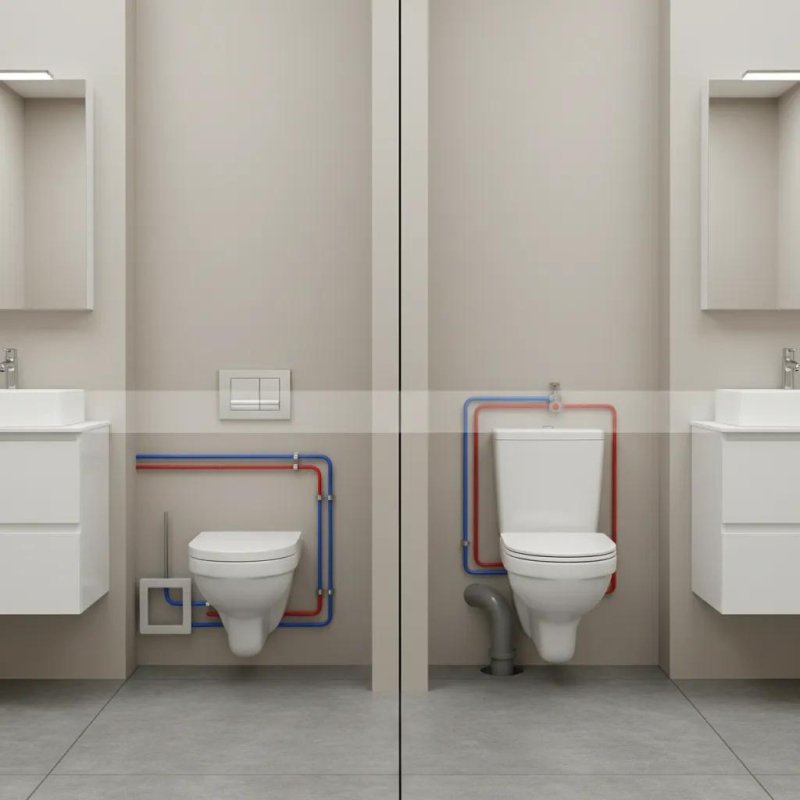
Everyone asks about wall hung wc price, so let’s be honest: it costs more upfront. You’re paying for the bowl, the carrier frame, the concealed cistern, the flush plate and extra labour for framing and tiling around the unit. A floor mounted WC skips most of that, so the total bill is usually lower. Prices vary widely by brand, material and country, so compare full installed quotes, not just bowl prices.
Over time the gap can narrow. A wall hung toilet saves cleaning time, can mean less floor tile cut around the base, and often makes a renovated bathroom feel more premium. Think of it like a better kitchen layout: you notice the cost on day one and the benefit every day after.
Which Is Better for Your Bathroom?
So which is better? Choose a wall hung toilet if you want easy floor cleaning, a space-saving bathroom and a flexible installation height, especially if you’re renovating anyway, since the frame is easiest to add while the walls are open. Our wall hung closet range shows how clean the finished look can be.
Choose a floor mounted WC if your budget is tight, your wall can’t hold a frame, or you want simple installation and easy access to the tank. A one piece closet gives you a sleek floor mounted option with a seamless bowl and cistern, and no frame is needed. If you still can’t decide, ask yourself whether you’d rather open up the wall or live with the floor as it is. Your answer usually settles it.
FAQs
Is a wall hung toilet better than a floor mounted toilet?
It depends on your priorities. A wall hung toilet is better for easy floor cleaning, a modern look and adjustable height. A floor mounted WC is better for lower cost, simpler installation and easy access to the tank. For most renovations with open walls, wall hung is the more stylish choice, while floor mounted is the practical one.
What is the weight capacity of a wall hung toilet?
A wall hung toilet fitted on a proper carrier frame is commonly rated for around 180 kg or more, though the exact figure depends on the model and frame. Always check the manufacturer’s tested rating and make sure the frame is anchored to a solid structure rather than a thin partition.
Are wall hung toilets hard to repair?
Not really, but access works differently. The concealed cistern sits inside the wall, so a plumber reaches the flush valve and fill valve through the flush plate or an access panel. Good frames are designed for this, and most repairs take about as long as they would on a standard toilet.
Why is wall hung WC price higher than a floor mounted toilet?
The price covers more than the bowl. You also pay for the carrier frame, the concealed cistern, the flush plate and additional labour to build and tile the wall around it. A floor mounted WC needs fewer parts and less work, so the total cost is usually lower.
Can I replace a floor mounted toilet with a wall hung toilet?
Yes, but plan for more than a simple swap. You’ll need space for a carrier frame, a wall that can support it, and plumbing changes to move the waste outlet. It’s easiest during a full bathroom renovation, when the walls are already open and the tiles are being replaced.
Conclusion
To sum up, a wall hung toilet gives you easy floor cleaning, a space-saving bathroom, an adjustable bowl height and a concealed cistern, at a higher price and with more complex installation. A floor mounted WC is cheaper, simpler to fit and easier to repair. The wall hung vs floor mounted toilet decision comes down to your wall, your budget and how much you value a clean floor. Check the weight capacity, plan the installation height, and compare installed quotes before you buy.
If you’re choosing between these options or need export-ready sanitaryware, we’d love to help. Share your requirements on our contact page and the Panthera Exim team will respond with options, specifications and pricing.
