
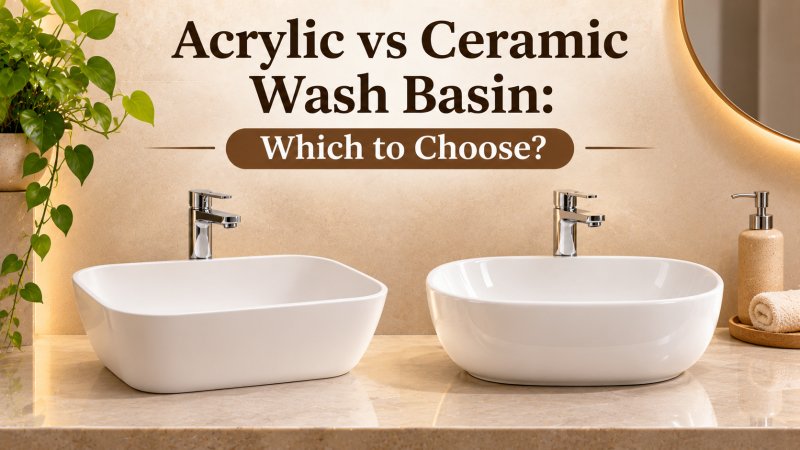
Acrylic vs Ceramic Wash Basin: Which to Choose?
Your wash basin is the most-touched fixture in the bathroom. You use it when you wake up, before you leave and after you get home, which means it sees more daily action than most gym equipment. Yet most people choose one by looks alone, and only discover the material question when a razor, a hot styling tool or a heavy bottle meets the surface.
So let’s settle the acrylic vs ceramic wash basin question properly. I’ll compare the two on durability, scratch resistance, stain resistance, weight and price, then help you pick the best material for your bathroom. To see real shapes and finishes as you read, open our sanitaryware collection in another tab.
Acrylic vs Ceramic Wash Basin: The Quick Answer
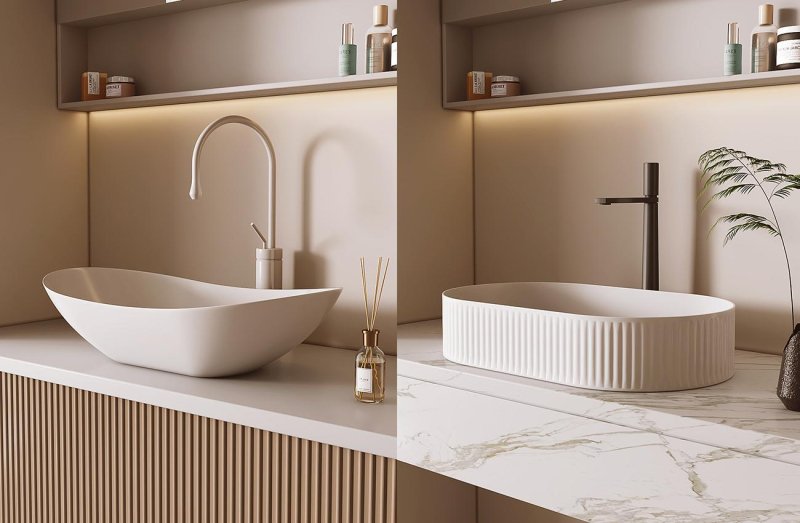
A ceramic wash basin is made from fired clay with a hard glaze, while an acrylic wash basin is moulded from a lightweight plastic sheet. In the acrylic vs ceramic wash basin comparison, ceramic wins on scratch resistance, stain resistance and long-term durability. Acrylic wins on weight, chip resistance and price. For most homes, ceramic is the best material for a wash basin, and acrylic suits budget projects, rentals and places where weight matters.
Insert image comparing a ceramic wash basin and an acrylic wash basin here
|
Feature |
Ceramic wash basin |
Acrylic wash basin |
|
Material |
Fired clay with glaze (vitrified china) |
Moulded acrylic, often fibreglass-backed |
|
Scratch resistance |
High |
Lower, though light scratches can be buffed |
|
Stain resistance |
High, thanks to the glaze finish |
Good when new, weaker once scratched |
|
Heat tolerance |
High |
Lower with very hot items |
|
Weight |
Heavy |
Light |
|
Chip risk |
Can chip on hard impact |
Rarely chips |
|
Typical price |
Moderate to higher |
Usually lower |
What Is a Ceramic Wash Basin?
A ceramic wash basin starts as a mix of clay and minerals that is shaped, glazed and fired at very high temperatures, often above 1,200°C. Premium sanitaryware is usually vitrified china, a dense body that absorbs almost no water. The glaze finish is the star: it seals the surface so it feels smooth and glassy, and it keeps stains, odours and bacteria from settling in.
That’s why ceramic dominates bathrooms worldwide. It looks clean, tolerates everyday cleaners and keeps its shine for years. The trade-offs are weight and brittleness. A ceramic basin is heavy, so it needs a sturdy vanity or wall, and a hard drop, such as a glass bottle or a tool, can chip the edge. Think of it as a good dinner plate: tough in daily life, unforgiving in accidents.
What Is an Acrylic Wash Basin?
An acrylic wash basin is made by heating an acrylic sheet and shaping it in a mould, often with a fibreglass backing for strength. The result is a light, warm-to-the-touch basin that can be formed into smooth, seamless shapes, including integrated basins and unusual curves. Because it’s easier to make and ship, acrylic is usually cheaper than ceramic.
It forgives accidents, too. Drop a toothbrush holder and acrylic rarely chips. The downside is surface hardness. Acrylic scratches more easily, can dull with harsh or abrasive cleaners, and doesn’t love very hot items placed on it. With gentle care it stays attractive, but it asks more of you than ceramic does.
Scratch Resistance and Stain Resistance Compared
Scratch resistance is where the two part ways most clearly. A ceramic glaze is very hard, so keys, rings and razors rarely leave marks. Acrylic is softer, so fine scratches appear with time, although light ones can often be buffed out with a polishing compound. Scratches matter beyond looks, because they can trap soap film and dirt.
Stain resistance follows a similar pattern. A smooth glaze finish repels toothpaste, hair dye, rust marks and hard water far better than most surfaces, and a quick wipe is usually enough. Acrylic is non-porous when intact, so it resists stains well at first, but a scratched or dull surface can pick up discolouration. If your bathroom sees heavy use or hard water, a ceramic wash basin has the edge.
Ceramic vs Acrylic Sink: Durability, Heat and Weight
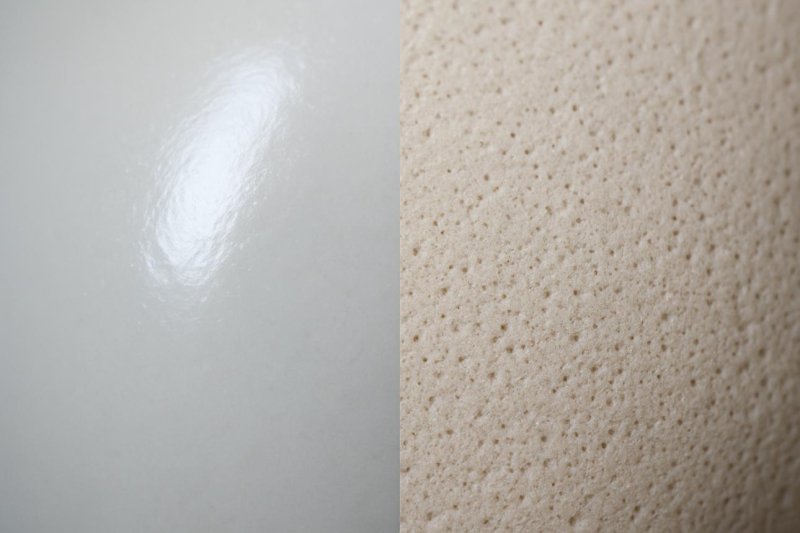
When people search ceramic vs acrylic sink, they usually want to know which lasts longer. Ceramic generally wins, because the glazed surface doesn’t fade, yellow or warp. Acrylic can dull or yellow under harsh chemicals and strong sunlight, and it may warp if exposed to very hot items such as a curling iron or a hot pan.
Weight changes the picture too. Ceramic is heavy and needs a strong vanity, solid wall fixings and careful handling. Acrylic is light, easier to install and cheaper to ship, which matters for importers and for DIY projects. If you’re fitting a basin onto a thin vanity top, the lighter acrylic may be the practical choice.
Water Use and Faucet Pairing
Your basin material doesn’t change how much water you use, but your faucet does. According to the US EPA, WaterSense labelled bathroom sink faucets that use a maximum of 1.5 gallons per minute can reduce a sink’s water flow by 30 percent or more compared with the standard 2.2 gallons per minute. You can read the details on the EPA WaterSense bathroom faucets page.
Pair a water-saving faucet with the right basin. Ceramic handles hot water and splashes without trouble, while acrylic benefits from a faucet that doesn’t send very hot water straight at one spot. Check the tap hole count and the spout reach so water lands in the centre of the bowl rather than on the rim.
Best Material for Wash Basin: Pros and Cons
Here’s the scorecard for each wash basin material at a glance:
Ceramic wash basin
-
Pros: scratch resistant, stain resistant, heat tolerant, long lasting, wide range of shapes
-
Cons: heavy, can chip on impact, usually higher price
Acrylic wash basin
-
Pros: lightweight, chip resistant, lower price, seamless moulded shapes
-
Cons: scratches more easily, sensitive to harsh cleaners and high heat, may yellow over time
The verdict depends on how you live. If you want a basin that looks the same in ten years, ceramic is the safer pick. If your priorities are budget, weight and drop-proof forgiveness, acrylic earns its place.
Ceramic Wash Basin Price vs Acrylic
Now the practical question: ceramic wash basin price compared with acrylic. A ceramic wash basin usually costs more, particularly in designer shapes and larger sizes, because it needs more raw material, high-temperature firing and careful finishing. Acrylic is cheaper to produce and ship, so entry-level acrylic basins sit at the lower end of most price lists. Prices vary by brand, finish and country, so compare quotes for the same size and design.
Think in cost per year rather than cost today. A durable ceramic basin that lasts many years can outlast two or three budget acrylic units, though a well cared for acrylic basin can also last a long time. If your budget is tight or the basin is for a rental or guest bathroom, acrylic is a sensible choice, not a compromise.
How to Choose the Right Wash Basin Material
Match the material to the bathroom. For a family bathroom with heavy daily use and hard water, a ceramic wash basin is the safer bet. For a quick refit on a budget, a light vanity, or a children’s bathroom where drops are likely, acrylic makes sense. If you like the bowl-on-the-counter look, a countertop basin in ceramic gives you scratch resistance and a premium feel. Take a look at our table top basin range for shapes and sizes.
Check three things before you buy: the weight your vanity can carry, the tap hole position and the cleaning products you plan to use. Then compare sizes and finishes in our catalogue. A basin is one of those purchases you notice every day, so a few minutes of planning goes a long way.
FAQs
Which is better, an acrylic or ceramic wash basin?
For most homes, a ceramic wash basin is better because it resists scratches and stains, handles heat and keeps its finish for years. An acrylic wash basin is better when you need a lighter, cheaper or more drop-tolerant option. Your budget, usage and vanity strength should decide.
Is a ceramic wash basin more scratch resistant than acrylic?
Yes. The hard glaze on a ceramic wash basin resists scratches from rings, razors and keys far better than acrylic does. Acrylic is softer and shows fine scratches over time, although light marks can often be polished out.
What is the best material for a wash basin in a family bathroom?
Ceramic, usually vitrified china, is the best material for a wash basin in a busy family bathroom. It’s hard, stain resistant and easy to clean with ordinary products. If young children are likely to drop heavy items, consider a ceramic basin with a rounded edge and a sturdy countertop.
How long does a ceramic wash basin last?
A ceramic wash basin can last many years, often decades, if it isn’t hit by heavy objects and the fittings are maintained. The glaze doesn’t fade or yellow, so it keeps its look. Chips and cracks are the main risks, so handle it carefully during installation.
Is an acrylic wash basin cheaper than ceramic?
Usually yes. An acrylic wash basin costs less to make and ship, so it generally sits at a lower price than ceramic. Exact prices depend on brand, size and design, so compare quotes for similar models before you decide.
Conclusion
To sum up, a ceramic wash basin offers excellent scratch resistance, stain resistance and heat tolerance, with a longer lifespan, at the cost of weight and a higher price. An acrylic wash basin is lighter, cheaper and more resistant to chips, but it scratches more easily and needs gentler care. The acrylic vs ceramic wash basin decision comes down to your budget, your daily use and the strength of your vanity. For most households, ceramic is the best material for a wash basin.
If you’re choosing basins for a new bathroom or need export-ready sanitaryware, we’d love to help. Share your requirements on our contact page and the Panthera Exim team will respond with options, specifications and pricing.
