
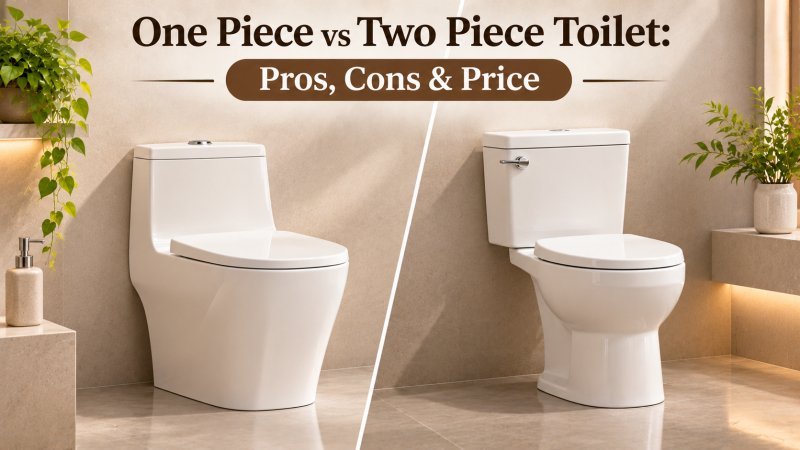
One Piece vs Two Piece Toilet: Pros, Cons & Price
Toilet shopping is nobody’s idea of a thrilling weekend, but the choice you make here follows you for fifteen years or more. Walk into a showroom and you’ll meet two basic shapes: a sleek one piece toilet that looks like a single sculpted unit, and a two piece toilet with a visible tank sitting on top of the bowl. They do the same job, yet they behave very differently when you clean, install, repair and pay for them.
In this guide I’ll settle the one piece vs two piece toilet question with clear pros, cons and price notes. If you’d like to see a real example while you read, take a look at our one piece closet collection.
One Piece vs Two Piece Toilet: The Quick Answer
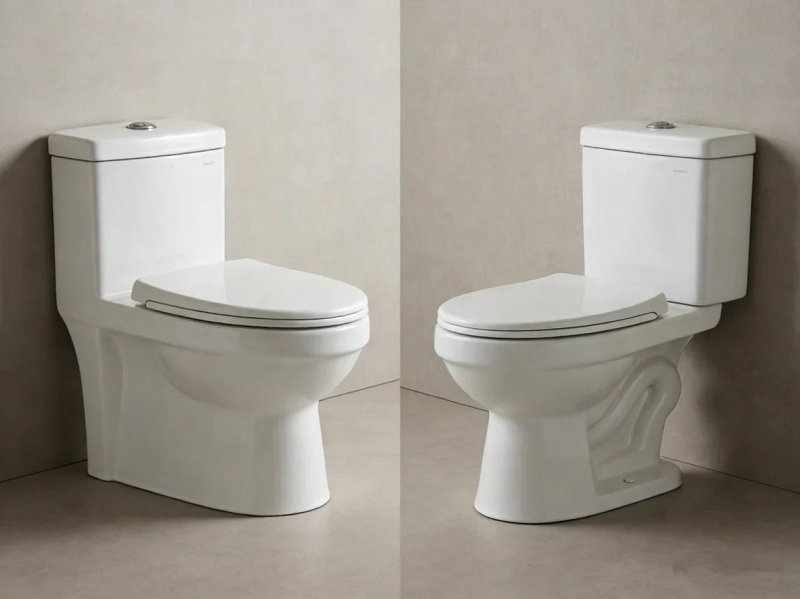
A one piece toilet has the tank and bowl moulded into a single unit, while a two piece toilet has a separate tank that bolts onto the bowl. In the one piece vs two piece toilet comparison, one piece wins on seamless design, easy cleaning and a modern look. Two piece wins on price, easier transport and simpler part replacement. A two piece WC is also called a coupled closet when the tank sits directly on the bowl, which is the most common layout.
Insert image comparing a one piece toilet and a two piece toilet side by side here
|
Feature |
One piece toilet |
Two piece toilet |
|
Construction |
Tank and bowl moulded together |
Tank bolted onto the bowl |
|
Look |
Sleek, seamless, low profile |
Traditional, visible joint |
|
Cleaning |
Easier, no gap or joint |
More crevices around the joint |
|
Handling |
Heavier, one bulky piece |
Lighter pieces, easier to carry |
|
Leak points |
Fewer, no tank-to-bowl joint |
Gasket and bolts need checking |
|
Repair |
Whole unit replaced if cracked |
Tank or bowl can be replaced separately |
|
Price |
Usually higher |
Usually lower |
What Is a One Piece Toilet?
A one piece toilet is built as a single ceramic body, with the cistern and bowl made together. There is no joint, no bolts between tank and bowl, and no gap for dust to settle. Many models also have a concealed trapway, which hides the curved drain channel behind a smooth skirted side, so the whole outside wipes clean in seconds. That seamless design is the main reason people love them.
The cistern on a one piece closet usually sits lower, so the unit looks compact and modern, which helps in small bathrooms. The catch is weight. One piece units are heavier and bulkier to carry through doors and up stairs, so installation often needs two people and careful handling. Think of it as the difference between moving a sofa and a set of flat-pack shelves.
What Is a Two Piece Toilet?
A two piece toilet has a separate cistern and bowl. The tank sits on the back of the bowl and is held down by bolts, with a rubber gasket forming the seal. This arrangement is also called a coupled closet or close-coupled toilet. It’s the most common type in homes worldwide because it’s simple, familiar and available in many styles and price levels.
Having two parts brings flexibility. You can carry each piece separately, which makes delivery and installation easier, and you can replace the tank or bowl on its own if one is damaged. The joint between them is the downside. Dust and grime collect there, and the bolts and gasket need an occasional check to prevent slow leaks.
One Piece Toilet Pros and Cons
Here’s the quick scorecard for a one piece toilet:
Pros
-
Seamless design that looks clean and modern
-
Easy to clean, with no joint or crevice
-
Fewer leak points between the tank and the bowl
-
Often a compact, low-profile shape that suits small bathrooms
Cons
-
Higher price
-
Heavier and harder to move and install
-
The whole unit needs replacing if the ceramic cracks
-
Fewer style and size options in some markets
Those one piece toilet pros and cons explain why it’s a favourite for renovations and new builds where looks and cleaning matter, and less so in budget projects where cost leads.
Two Piece WC Pros and Cons
The two piece WC has its own honest scorecard. On the plus side, it’s more affordable, easier to carry and install, and comes in a wide choice of shapes, sizes and finishes. You can also replace the tank or the bowl separately, which helps if something breaks. On the minus side, the joint collects dust, the bolts can loosen over time, and the stacked look feels less sleek. If you hate cleaning around joints, you’ll notice that by week three.
Water Use and Flush: Does the Type Matter?
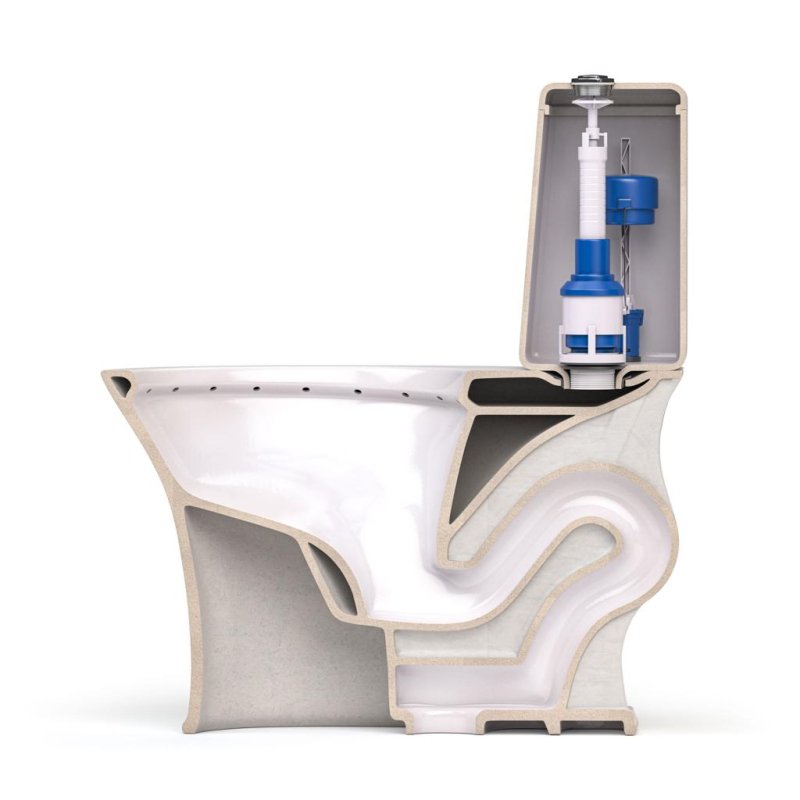
Whichever you choose, check the flush. According to the US EPA, older, inefficient toilets can use as much as 6 gallons per flush, while WaterSense labelled models use 1.28 gallons per flush or less, which is 20 percent less than the federal standard of 1.6 gallons per flush. The EPA also notes that toilets account for nearly 30 percent of an average home’s indoor water use. You can read more on the EPA WaterSense residential toilets page.
Both one piece and two piece toilets come in efficient dual flush versions, so type alone shouldn’t decide water use. Look for the flush volume on the specification sheet, a properly sealed cistern and a trapway that clears waste cleanly.
One Piece Closet Price vs Two Piece Toilet Cost
Now the question everyone asks: one piece closet price. A one piece toilet usually costs more because it needs more ceramic, more precise moulding and more careful firing and handling. A two piece toilet is typically the cheaper option, and basic models tend to be the lowest priced in most showrooms. Exact figures vary by brand, material, finish and country, so compare the total installed price, including delivery, fitting and extras like the seat.
Over the long run the gap can narrow. A one piece closet saves cleaning time and has fewer places to leak, while a two piece toilet saves money upfront and lets you replace parts one at a time. It’s like buying a premium kettle versus a basic one: both boil water, but one is nicer to live with.
One Piece vs Two Piece Commode: Which Should You Buy?
Choose a one piece commode if you want easy cleaning, a modern look and fewer leak points, and you’re ready to pay more and handle a heavier unit. Choose a two piece commode if budget leads, delivery access is tight, or you want the flexibility to replace parts. Before deciding, check three things: the rough-in distance (the distance from the wall to the waste outlet), the trap type, and the space in front of the toilet.
If floor space is limited, consider a wall hung option too. Our wall hung closet range offers a floating bowl with a concealed cistern. To compare finishes and sizes across ranges, browse our catalogue before you order. And if you’re installing it yourself, remember that a one piece unit is heavy, so ask someone to help, because ceramic does not forgive dropped corners.
FAQs
Which is better, a one piece or two piece toilet?
Neither wins every time. A one piece toilet is better for easy cleaning, a seamless look and fewer leak points, while a two piece toilet is better for a lower price, easier transport and replaceable parts. Choose one piece if looks and cleaning matter most, and two piece if budget and easy installation lead.
Is a one piece toilet easier to clean?
Yes. A one piece toilet has no joint between the tank and the bowl, so there’s no gap where dust and grime can settle. Many models also have a concealed trapway with smooth sides, so you can wipe the whole outer surface in one pass.
Why is one piece closet price higher?
A one piece closet needs more ceramic and more precise moulding, and it’s harder to fire and handle without defects. It’s also heavier and costlier to ship. These factors push up the price compared with a two piece toilet, although the exact gap depends on the brand, finish and market.
Are two piece WC models more likely to leak?
They have more places where a leak can start, namely the gasket and bolts between the tank and the bowl. With proper installation and an occasional check, a two piece WC works reliably for years. A one piece toilet avoids that joint, so it has fewer leak points.
Can I replace a two piece toilet with a one piece toilet?
Usually yes, as long as the rough-in distance, trap type and available space match. Measure the distance from the wall to the waste outlet and check the footprint of the new unit. Because one piece models are heavier, plan for extra help during installation.
Conclusion
To sum up, a one piece toilet offers a seamless design, easy cleaning and fewer leak points, at a higher price and with heavier handling. A two piece toilet is cheaper, easier to carry and lets you replace parts separately, but its joint collects dust and needs occasional checking. The one piece vs two piece toilet decision comes down to budget, cleaning habits and how you’ll get the unit into the bathroom. Check the rough-in distance, compare installed prices and look at the flush volume before you buy.
If you’re choosing a closet for a new bathroom or need export-ready sanitaryware, we’d love to help. Share your requirements on our contact page and the Panthera Exim team will respond with options, specifications and pricing.
