
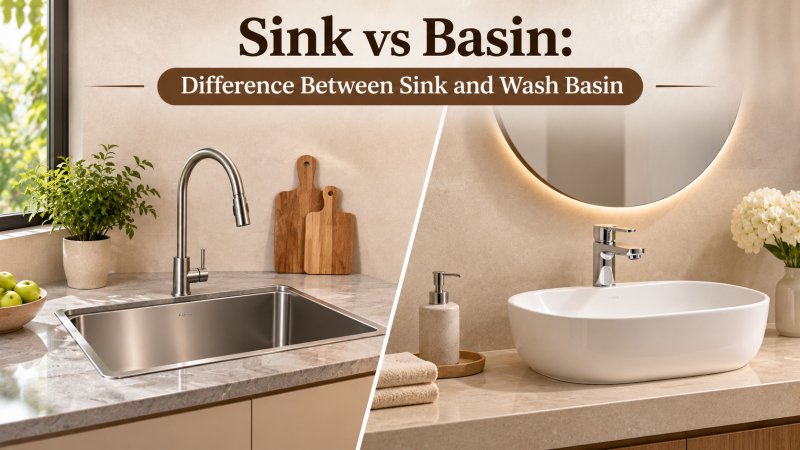
Sink vs Wash Basin: What’s the Difference?
Walk into any home store and you’ll see a kitchen sink the size of a small boat next to a wash basin the size of a salad bowl. Both hold water, both have a drain, and both get called “the sink” by someone at some point. So what’s the real story? The difference between sink and wash basin looks tiny until you’re ordering one, and then it affects your plumbing, your budget and how your bathroom feels.
I’ll keep this practical. In this guide I’ll explain sink vs basin, give you simple definitions you can quote, and help you pick the right fixture for each room. If you want to see real examples while you read, our sanitaryware range is a good place to browse.
The Quick Answer: Difference Between Sink and Wash Basin
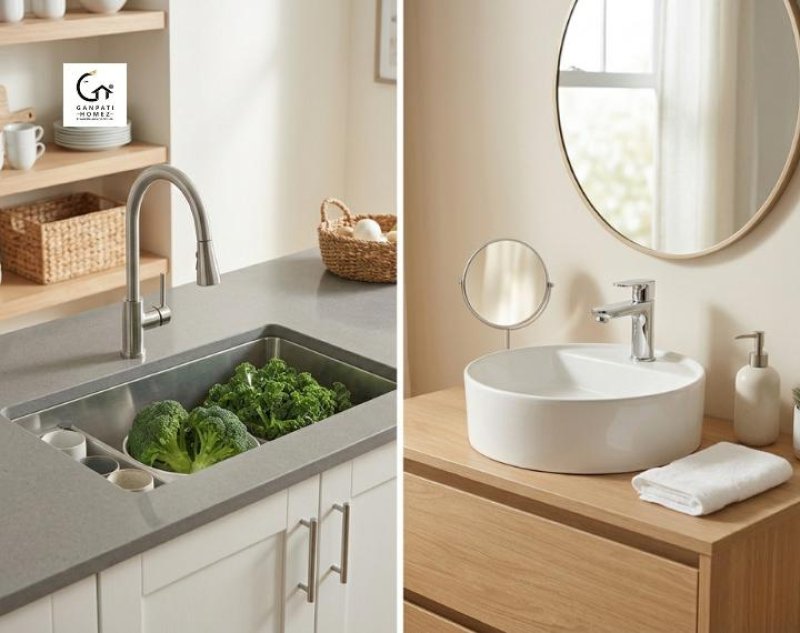
Here’s the short version. A sink is a deep, fixed bowl used mainly in kitchens and utility areas for washing dishes, food and cleaning items. A wash basin is a shallower bowl, usually in a bathroom, designed for washing hands and face. The difference between sink and wash basin comes down to depth, location and the job each one does. In American English, people often call a bathroom wash basin a bathroom sink, which is where most of the confusion starts.
Insert image comparing a kitchen sink and a bathroom wash basin side by side here
|
Feature |
Sink |
Wash basin |
|
Main location |
Kitchen, utility room, laundry |
Bathroom, powder room, cloakroom |
|
Main use |
Dishes, food prep, cleaning |
Hands, face, brushing teeth |
|
Typical depth |
Deep, often 8 to 10 inches (20 to 25 cm) |
Shallow, often 5 to 6 inches (12 to 15 cm) |
|
Common materials |
Stainless steel, granite composite, fireclay |
Vitreous china, ceramic, stone, glass |
|
Faucet style |
Tall, swivelling spout |
Shorter, fixed spout |
|
Drainage |
Wider drain, often with strainer or disposal |
Smaller drain, usually with overflow |
Sink Meaning: What Counts as a Sink
Sink meaning is simple in the trade. A sink is a fixed bowl with a drain and water supply, built to handle heavy, messy work. Think greasy pans, vegetable peels and the occasional forgotten casserole. That’s why kitchen sinks are deep, strong and often come with two bowls or a drainboard. Stainless steel and granite composite are popular because they shrug off heat, scratches and the daily abuse of cooking.
Sinks also appear outside the kitchen. Utility rooms, laundries and workshops use them for mop buckets, paint brushes and muddy boots. If a fixture is built to take a beating and handle large volumes of water, it’s a sink, whatever room it lives in.
Wash Basin Meaning: What Counts as a Basin
Wash basin meaning is just as clear once you see the job. A wash basin is a bathroom fixture for personal hygiene: washing hands and face, brushing teeth, shaving. It’s shallower and smaller because you never need to submerge a roasting tray, and the gentler shape keeps splashing down. Most are made from vitreous china or ceramic, a glazed material that resists stains and wipes clean in seconds.
You’ll hear several names for it: washbasin, hand basin, lavatory basin, or just basin. All point to the same idea. The basin is the bowl, while the faucet or tap, the drain and the mounting style complete the setup. That mounting choice is where wash basins get interesting, and we’ll get there shortly.
Kitchen Sink vs Wash Basin: How They Differ in Daily Use
Put a kitchen sink vs wash basin side by side and the design logic shows. Depth is the obvious difference. A kitchen sink is typically 8 to 10 inches deep so tall pots fit and water stays put, while a wash basin is often around 5 to 6 inches deep, which suits quick, light washing. Width follows the same pattern: kitchen sinks commonly run from about 24 to 36 inches, while most basins sit between 16 and 24 inches.
Drainage differs too. Kitchen sinks handle food scraps and grease, so they usually have a wider drain and a strainer basket, and many homes add a garbage disposal. Bathroom basins carry soap, toothpaste and hair, so a smaller drain with an overflow opening is typically enough. Under many plumbing codes, kitchen drains run around 1.5 inches and bathroom drains around 1.25 inches. Check your local rules before buying, because swapping one for the other can mean changing pipework.
Basin vs Sink: Why the Words Change by Country
The basin vs sink question also depends on geography. In the UK, India and much of the Commonwealth, basin means the bathroom fixture and sink means the kitchen one. In the US and Canada, people say bathroom sink for the basin and kitchen sink for the other, so sink vs basin can sound like a trick question. When you shop or write across markets, state the room and the use, and nobody ends up with the wrong fixture.
Hand Basin vs Wash Basin: Is There a Difference?
Is there really a gap between a hand basin vs wash basin? Technically, no. A hand basin is simply a small wash basin, often found in cloakrooms and powder rooms where you only need to wash your hands. A full wash basin is slightly larger and more comfortable for washing your face and brushing teeth. In daily use the two names overlap, so treat hand basin as a compact type and wash basin as the general term.
Types of Wash Basins You’ll See in Bathrooms
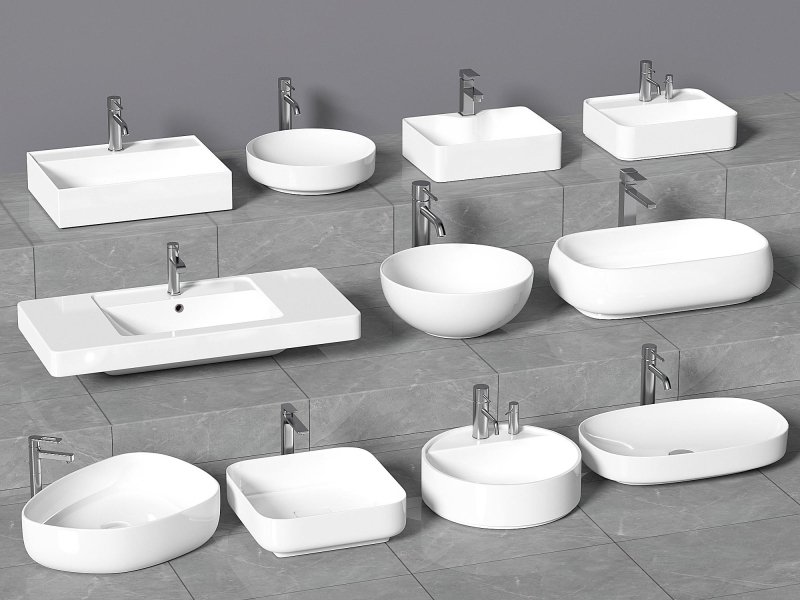
Once you’ve chosen a basin, you still need to choose how it mounts. These are the five styles you’ll meet most often:
-
Pedestal basin: sits on a column that hides the pipes, a classic choice that saves floor space.
-
Countertop basin: rests on top of a counter or bathroom vanity like a bowl, with a bold, sculptural look.
-
Wall-hung basin: attaches directly to the wall and leaves the floor open, which makes cleaning easy.
-
Semi-recessed or undermount basin: sits partly or fully inside the counter for a smooth, built-in finish.
-
Vanity with integrated basin: a one-piece top with the bowl moulded in, plus storage below.
If you like the above-the-counter look, take a look at our table top basins to compare shapes and sizes.
Faucet or Tap and Drainage: What Changes Between the Two
Don’t forget the faucet or tap. Kitchen taps are tall, often with a swivel spout and pull-out spray for filling pots. Bathroom taps are shorter and sized for a small bowl. Water use differs as well. According to the US EPA, WaterSense labelled bathroom sink faucets that use a maximum of 1.5 gallons per minute can cut a sink’s flow by 30 percent or more compared with the standard 2.2 gallons per minute. You can read the details on the EPA WaterSense bathroom faucets page.
That saves water without changing your routine, which is a rare win in home improvement. Good drainage matters just as much. A slow drain, a loose trap or a poorly sealed overflow causes more bathroom complaints than any design flaw. Choose a basin whose tap holes match your faucet, and confirm the drain size before you order.
Which Should You Buy: Sink or Wash Basin?
The decision is easier than it sounds. For cooking, cleaning and heavy washing, choose a sink. For personal hygiene, choose a wash basin. Then match the style to the room. A small bathroom does well with a wall-hung or pedestal basin that keeps the floor clear. A family bathroom with storage needs may prefer a bathroom vanity with a built-in or countertop basin, because the cabinet hides pipes and holds towels.
Measure before you fall in love. Check the counter cut-out, the number of tap holes, the distance from the wall to the front of the basin, and the elbow room. A basin that looks elegant in a showroom can feel cramped in a narrow bathroom, and that regret lasts for years. Browse our full catalogue to compare sizes and finishes before you decide.
FAQs
What is the difference between sink and wash basin?
A sink is a deep fixture used mainly in kitchens and utility areas for dishes, food and cleaning. A wash basin is a shallower bathroom fixture for washing hands and face. The difference between sink and wash basin is mostly depth, location and drainage, and the two are built for very different amounts of water and mess.
Is a bathroom sink the same as a wash basin?
Yes, in everyday use. Americans usually say bathroom sink, while British and Indian English say wash basin or basin. They describe the same fixture. Sink vs basin only becomes a real distinction when you compare a bathroom basin with a deep kitchen sink.
What is the difference between hand basin and wash basin?
A hand basin is a smaller wash basin, typically used in cloakrooms and powder rooms where you only wash your hands. A wash basin is the general term and is a little larger. Many people use the two names interchangeably.
Can I use a kitchen sink in the bathroom?
You can, but it rarely works well. Kitchen sinks are deeper and wider than most bathrooms need, and their drains and taps are sized differently. A basin designed for the bathroom fits better, drains correctly and looks right with a vanity.
Which wash basin type suits a small bathroom?
A wall-hung or pedestal basin usually works best. Both free up floor space and make the room feel larger. A compact countertop basin on a slim vanity can also work if you need storage.
Conclusion
To sum up, a sink is a deep, tough fixture for kitchens and utility work, while a wash basin is a shallower bathroom fixture for personal hygiene. The difference between sink and wash basin shows up in depth, materials, faucet style and drainage. Sink vs basin changes by country, hand basin is just a compact wash basin, and the mounting style, from pedestal to countertop, shapes how your bathroom looks and works.
If you’re choosing basins, vanities or other sanitaryware, or you need export-ready products, we’d love to help. Share your requirements on our contact page and the Panthera Exim team will get back to you with options, specifications and pricing.
