
Lavatory vs Toilet vs WC vs Commode: Key Differences
Ask five people to point at the toilet and you’ll hear five different words. A Briton says loo, an American says restroom, your plumber says WC, and your grandmother says commode. The hotel brochure just calls it a lavatory and moves on. So are they all the same thing? Not quite, and the lavatory vs toilet question has tripped up plenty of shoppers and writers.
In this guide I’ll untangle lavatory vs toilet, explain the difference between toilet and commode, and show where the WC fits in. If you’re planning a bathroom or sourcing fixtures, it helps to see the real products, so keep our sanitaryware collection open in another tab while you read.
Lavatory vs Toilet vs WC vs Commode: The Quick Answer
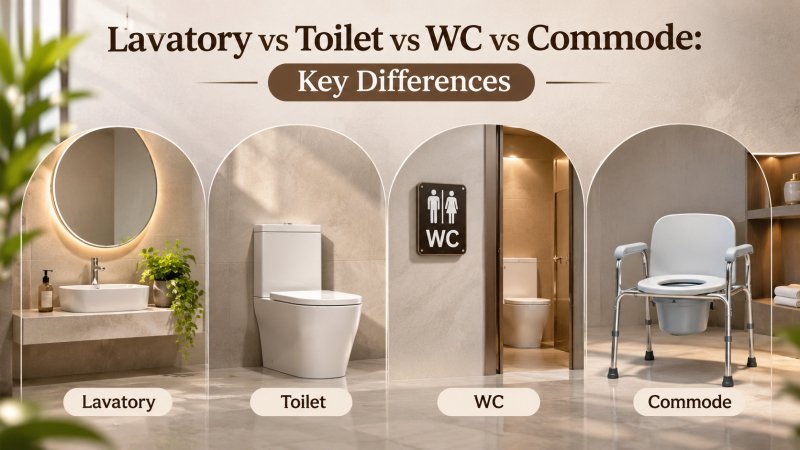
Here’s the short version. A toilet is the fixture itself: the bowl, seat and flush system you use. A lavatory is traditionally a room or basin for washing, and today it often means a bathroom that contains a toilet. WC stands for water closet and refers to a flush toilet or the small room that holds one. A commode is either a Western-style toilet in everyday Indian speech, or a portable chair with a removable pot used at a bedside.
|
Term |
Original idea |
Most common meaning today |
Where you’ll hear it |
|
Lavatory |
Latin lavare, to wash |
A washing room or basin; a toilet room in travel and public settings |
Airlines, hotels, North America, trade catalogues |
|
Toilet |
French toilette, grooming |
The bowl fixture; in British English also the room |
Worldwide |
|
WC |
Water closet |
A flush toilet or the small room that contains one |
UK, Europe, India, building plans |
|
Commode |
French commode, convenient |
Western-style toilet (India); bedside chair with pot (healthcare) |
India, hospitals, care homes |
Lavatory Meaning: More Than Just a Bathroom Word
Let’s start with lavatory meaning. The word comes from the Latin lavare, which means to wash, so a lavatory was originally a place to wash your hands and face. That history explains the confusion. In sanitaryware catalogues a lavatory can still mean the wash basin, while in everyday North American English it usually means a restroom. On a plane, the lavatory is the tiny room with the folding door and the questionable lighting.
So when someone searches lavatory vs toilet, the honest answer is that one describes a space and the other describes the fixture. A lavatory may contain a toilet, a basin, or both. A toilet is just the bowl, seat and flush system. Think of the lavatory as the kitchen and the toilet as the stove inside it.
Toilet vs Lavatory: Why the Words Overlap
The toilet vs lavatory debate gets muddier because toilet has two jobs. The word comes from the French toilette, which once meant dressing and grooming, as in a lady’s morning toilette. Over time it shifted to the room where you got ready, and then to the fixture in it. In British English toilet can mean the room as well as the bowl, which is why the UK uses it so freely.
For writing and product listings, a simple rule keeps things clear. Use toilet for the fixture, lavatory or washroom for the room, and basin for the washing fixture. Follow that and nobody will email you asking whether the lavatory is included in your shipment of toilets.
Water Closet Meaning and the Difference Between WC and Toilet
The difference between WC and toilet is mostly about history and flush technology. A water closet was a small room with a flushing toilet, a big upgrade on chamber pots and outdoor privies. Early patents for flushing designs appeared in England in the late eighteenth century, and the term stuck across Europe, Asia and parts of the Middle East. Popular myths aside, no single person invented the whole thing.
Water closet meaning today is flexible. Builders write WC on floor plans to mark the toilet room. Buyers use it for the fixture too, as in wall hung WC or Indian WC. So in modern use the difference between WC and toilet is tone, not function. WC sounds technical and international, while toilet sounds everyday.
Commode Meaning and the Difference Between Toilet and Commode
Commode meaning depends on who you ask. In French, commode means convenient, and in older English homes it was a chest of drawers or a chair concealing a chamber pot. In hospitals and care homes a commode is still a portable chair with a bucket, used by people who can’t easily reach the bathroom. In India and several nearby countries, though, commode is the everyday word for a Western-style toilet with a seat and a flush tank.
That explains the difference between toilet and commode in practical terms. In a medical or UK setting, a commode is a movable aid and a toilet is plumbed into the drain. In an Indian home, the commode is simply a type of toilet, the sitting kind, as opposed to the squatting Indian pan. When a buyer asks for a commode, you can usually read it as a Western closet. A one piece closet, where the bowl and cistern are joined, is a popular example.
How These Words Change From Country to Country
Words travel badly across borders. Here’s how the same fixture gets named around the world:
-
United States and Canada: bathroom, restroom or washroom for the room, toilet for the fixture, and lavatory mostly on planes and formal signage.
-
United Kingdom and Ireland: toilet or loo for both, WC on plans, and commode for the bedside chair.
-
India: WC, commode and toilet are all heard, and commode usually means the Western style.
-
Europe and the Middle East: WC is common on signs and in building plans.
-
Australia: toilet in most settings, dunny in casual speech.
If you export or write for several markets, pick one term per audience and stay consistent.
Why the Fixture Matters More Than the Name
Names aside, the fixture itself matters a lot. The WHO and UNICEF Joint Monitoring Programme estimated that 43% of the world’s population, about 3.5 billion people, lacked safely managed sanitation in 2022. You can read the latest figures on the WHO water, sanitation and health monitoring page. Those numbers are a reminder that a clean, well-designed toilet is real infrastructure, not just bathroom décor. who
At home, quality shows up in small places. A dual flush tank saves water, a properly fitted toilet seat prevents wobble and stains, and a glazed ceramic surface is easier to keep clean than a rough one. Other bathroom fixtures, from basins to taps, work best when you choose them together with the toilet, so the whole room behaves like a system.
Which Type Should You Choose for Your Bathroom?
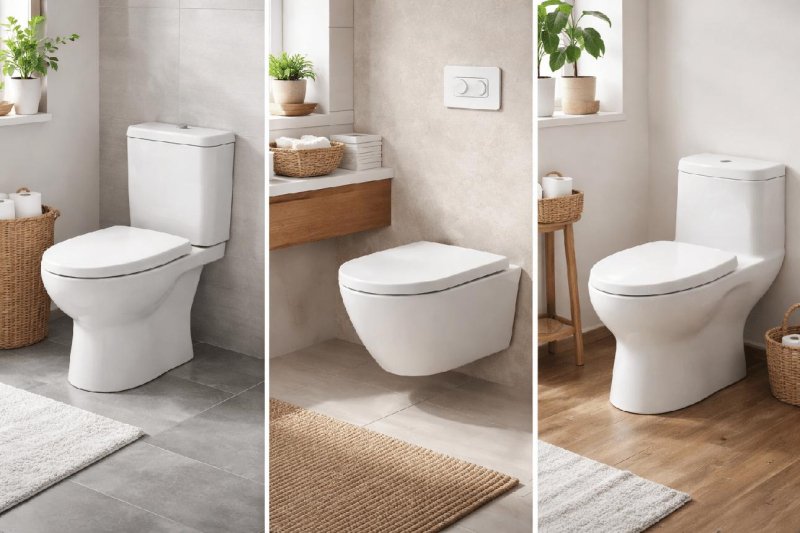
Once you know the terms, choosing gets easier. Floor-mounted toilets are the classic option: easy to install, usually cheaper, and compatible with almost any layout. Wall hung closets, where the bowl floats above the floor and the cistern hides inside the wall, free up floor space and make cleaning simple, which small bathrooms love. You can compare styles in our wall hung closet range.
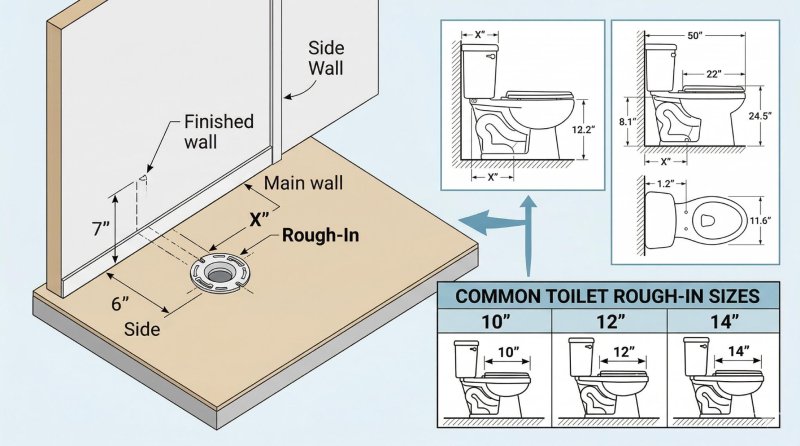
Think about the people using the room, too. Taller or older users often prefer a slightly raised bowl, and a household with kids may want a slow-close toilet seat to save fingers and nerves. Measure the rough-in distance, check the trap type, and confirm the flush system before you buy. Ten minutes of measuring beats a week of returns, and I say that with sympathy for anyone who has carried a ceramic bowl up three flights of stairs.
FAQs
Is a lavatory the same as a toilet?
Not exactly. A toilet is the fixture, while a lavatory is traditionally a room or basin for washing. In everyday North American English, lavatory often means a restroom that contains a toilet, so people use the words interchangeably even though they describe different things.
What is the difference between toilet and commode?
A toilet is plumbed into a drain and uses a flush system. A commode is either a Western-style toilet in common Indian usage or a portable chair with a removable pot used in healthcare. Context tells you which one is meant, so check who is speaking before you assume.
What is the difference between WC and toilet?
In function, very little. WC stands for water closet and often marks the toilet room or the flush toilet on plans and signs, especially in Europe and India. Toilet is the everyday word. Both describe a flushing sanitary fixture.
Is toilet vs lavatory a British vs American difference?
Partly. Americans lean toward bathroom or restroom, and lavatory appears in aviation and formal signage. British English uses toilet or loo for both the room and the fixture, and lavatory sounds a little formal there. The fixture is the same everywhere; only the label changes.
Which term should I use on a product page or export order?
Use toilet or WC for the fixture and add the type, such as one piece closet or wall hung WC. Lead with the word your buyers actually search, and mention alternatives once so nobody gets confused. Clear naming cuts down on mistakes in quotes and shipments.
Conclusion
Here’s the takeaway. A toilet is the fixture, a lavatory is traditionally a room or basin for washing, a WC is a water closet, and a commode is a Western-style toilet in India or a portable chair in healthcare. Lavatory vs toilet comes down to space versus fixture, and the difference between toilet and commode comes down to where you live and who you ask. Pick the right word for your audience, then pick the right fixture for your bathroom.
If you’re choosing closets, basins or other sanitaryware, or you want export-ready products, we’d love to help. Tell us what you need on our contact page and the Panthera Exim team will get back to you with options, specifications and pricing.
